


Depression
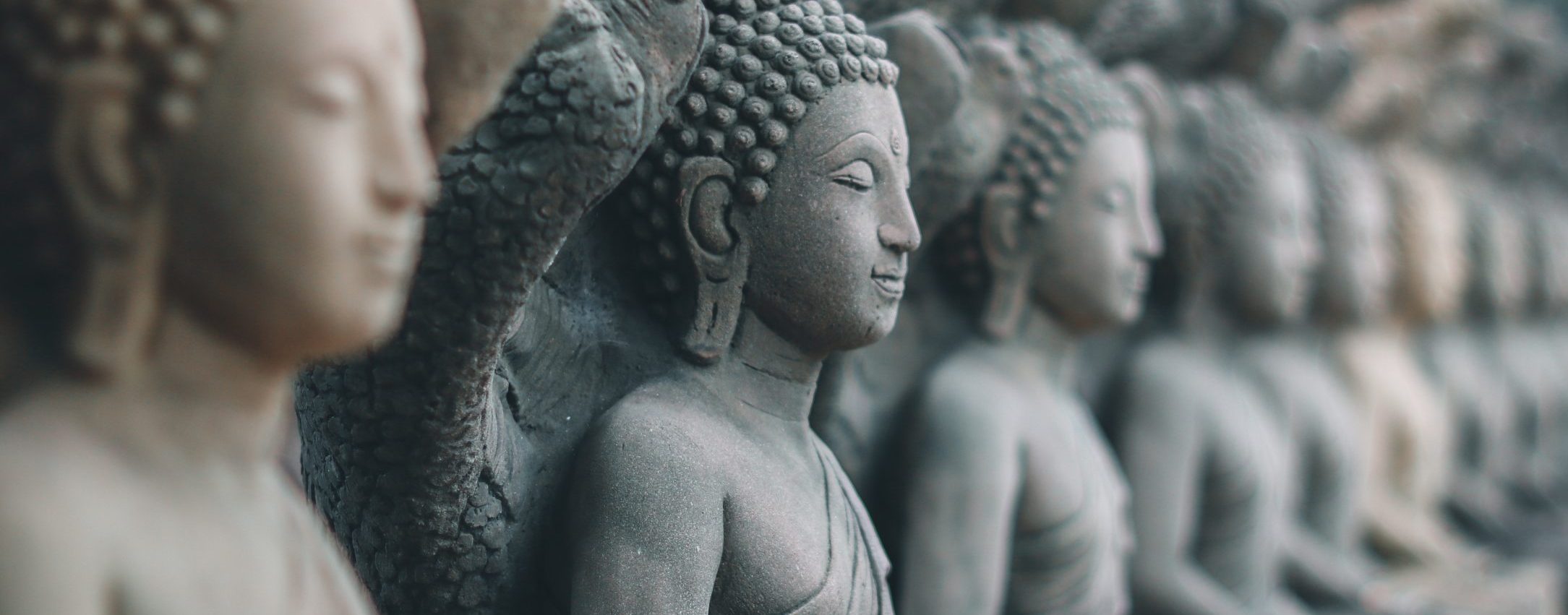

This blog was written by Tara McRae and reflects her point of view on Buddhism and its connection to CBT.
 In my personal life, I have been drawn to Buddhist teachings. I read many authors such as Thich Nhat Hanh, Pema Chödrön, and the Dalai Lama. I found a lot of wisdom in their words and teachings, which offered me guidance.
When I started studying Cognitive Behaviour Therapy (CBT) as part of my career, I began to notice its resemblance to Buddhist teachings. Here was this therapeutic approach coming together perfectly with a way of seeing things that I truly align with. Much can be written on this topic, but for now, I will share with you a few points in which there is overlap between Buddhist teachings and CBT.
The second arrow metaphor 
I often use the second arrow metaphor with the clients I support.
This known Buddhist metaphor explains that in life, we are often struck with arrows. Being struck by an arrow is painful. As humans, when an arrow strikes us, a second arrow strikes again. Now we are really suffering. In reaction to that first arrow, we may say “ouch that hurts” and then, we react to the reaction, add in the suffering; “ugh, why am I not stronger? Why do I have to feel this pain? Why can’t I just be stoic? If I had more muscle, it wouldn’t hurt this much!”.
Many times, CBT looks to first support clients in managing that second arrow, the suffering we add to the pain. For instance, clients who are struggling with panic disorder first start out experiencing a panic attack: increased heart rate, difficulty breathing, tightness in their chest, etc. Eventually, they begin to fear the panic attack itself; they may start to think, “Why is this happening to me?” “I am going crazy.” ” I need to go to the hospital.” “There is something wrong. You can see how that first arrow, the panic attack itself, is painful, and now add a second arrow (suffering), and it becomes a panic disorder.
You are not your thoughts
Quite popular are Buddhist meditations, which focus on distancing us as people from our thoughts. Encouraging us to be the observer of thoughts passing through, like clouds in the sky, without becoming attached to them and holding on.
In CBT, we refer to this as decentering: the ability to view cognitions as mental events rather than as expressions of reality "? one stands back and observes it, recognizing that a thought is an opinion, not necessarily a fact". We look to help clients create distance between them and their thoughts, the way they think, and their afflictions. For people who are suffering from depression, we may help them to connect with the person they were before they started experiencing depression, so they may see themselves as separate from the depression. When people are ruminating (thinking about the past over and over), or worrying (planning ahead for things which they may not be able to control) we help them to notice and observe the times in which they are being sucked into this rabbit hole.
"Fear is a natural reaction to moving closer to the truth" - Pema Chodron
Pema Chodron, pulling from the wisdom of traditional Buddhist teachings, speaks of fear and courage. She speaks of how, as humans, we are constantly looking to escape what is in front of us. One of the things we try to escape is fear, being told to "take a pill, smooth it over, distract [yourself], but by all means make it go away". She explains that the key is not bailing out in the face of fear.
Of great joy to me is the fact that these Buddhist teachings, which have been a guiding light in my life, appear to have meshed into an evidence-based therapeutic approach, which is helping so many people on their path to wellness.
About the author
 Tara McRae is a registered Social Worker (RSW) and psychotherapist at CMAP Health. Tara holds a Master's Degree in Social Work, an undergraduate in psychology, and a minor in social work from the University of Ottawa, which she has used to support adults in various settings over the last 10 years. To find out more about Tara, you can view her profile.