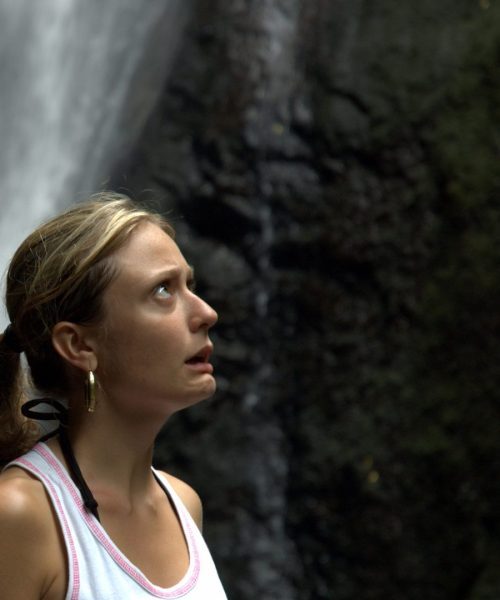
Fear is the natural response to a perceived threat. It can protect us from danger. But fear also can stop us from achieving our goals and living our lives to the fullest. Facing something you fear is not only an act of courage but also an opportunity for personal growth and self-discovery.
The perceived threat can be either physical or psychological. Threats activate our sympathetic nervous system and trigger a fight-or-flight response, preparing us to either fight or run away from the danger.
In the fight or flight response, stress hormones like adrenaline and cortisol flood our brain and body. Our heart rate increases, our attention becomes super-focused on the threat, and blood is diverted from our digestive system to our muscles. This response made a lot of sense when our forebearers were confronting a tiger or a grizzly bear. And it works if we are called on to perform in an emergency, like lifting a fallen tree from a child.
Fear (1)
This response doesn't work well for most of the challenges we face in the 21st century, which are largely psychological. These challenges might include giving a presentation, talking to a stranger, or asking our boss for a raise. They could also involve irrational fears, such as fear of germs or fear of dogs. Fear teaches us to avoid certain situations. For our ancestors, this made sense-avoiding places frequented by bears or tigers was a survival strategy.
People fear various things, ranging from heights and public speaking to failure and rejection. These fears manifest in different ways, such as avoiding specific situations, experiencing anxiety, or enduring physical symptoms like sweating and a racing heart. Fear limits our potential, hinders both personal and professional growth, and affects our mental health. When we let fear dictate our actions, we restrict what we do. Over time, fear makes our lives smaller and more confined.
Confronting fear is essential for several reasons. First, it helps us expand our comfort zones and discover new opportunities. Avoiding what we fear only reinforces the belief that the feared object or situation is dangerous, which strengthens the fear over time. By facing fear, we can challenge these beliefs and reduce its power over us.
Second, overcoming fear fosters resilience and confidence. When we confront a fear, we build our ability to face future challenges and develop a sense of accomplishment. This resilience becomes a valuable tool for tackling other fears and obstacles in life.
Celebrate progress
Acknowledge and celebrate achievements, no matter how small. Doing so boosts confidence and motivates you to continue.
Learn coping skills
Challenge negative thoughts such as, "I can't do this," "Dogs are dangerous," or "People will think I'm an idiot." Fear thrives on irrational thoughts. Question their validity and replace them with realistic, positive ones, such as "I can learn how to do this," "Dogs are safe, but I can be cautious," or "I have something to say, and I am quite sensible."
Seek support
Don't face fear alone. Get support from friends, family, or a therapist.
Facing fear should be a gradual process, requiring patience and perseverance. Here are some steps to help you confront and overcome your fears:
- Understand your fear: Reflect on why it affects you so strongly and identify specific situations that caused it. Understanding the cause can reduce its power over you. However, don't wait until you fully understand your fear to face it. While understanding is helpful, it can also be used to avoid confronting what we fear.
- Take small steps: Gradual exposure to the feared situation will lessen your fear. Start small and increase exposure as you grow more comfortable. For example, if you fear giving a presentation, start by doing a short presentation alone or to one or two friends. Then progress to a small group, and finally present to the full group. Repeat each step until it feels tolerable.
- Practice relaxation: Try techniques like deep breathing, meditation, or mindfulness. It is important to use these as tools to help you face fear, not to avoid confronting it. Don't wait until you are perfectly calm to face your fear. You can face fear even when you feel anxious.
Facing fear is a deeply personal journey, and everyone experiences it differently. Many of my patients have had the courage to face their fears.
For example:
Alison, aged 29
had a severe fear of speaking in public. She was reluctant to say anything in front of anyone who wasn't a close friend and even then, only in small groups. This fear interfered with her job and caused her to avoid many social situations. She even became afraid of experiencing fear-related symptoms, such as an increased heart rate or dizziness.
Starting with small steps, Alison practiced speaking in front of friends and gradually faced larger groups. She ran upstairs and purposely spun in her chair to get used to sensations like an increased heart rate and dizziness. Over time, she stopped being afraid of these symptoms. Now she speaks in public with minimal fear, which has opened new professional and social opportunities.
John
had a fear of germs that limited his ability to visit friends or explore new places. He learned what was truly safe and started with small actions, like washing things only once. Gradually, he took on more difficult challenges, such as visiting friends without cleaning everything with a wipe. Overcoming this fear gave him a newfound sense of freedom and the ability to enjoy life more fully.
Facing your fears is not easy, but understanding and confronting them can help you break free and reach your potential. Courage is not the absence of fear but acting despite it. Embrace your fears to find your inner strength.